


In your business, electrical safety isn’t optional. Whether you run a factory, work as a systems integrator, or distribute specialized equipment, ensuring your electrical installation meets current standards is essential to protect your people, your equipment, and your operations. This guide walks you through each step to help you stay compliant, avoid costly mistakes, and build a safe, reliable infrastructure.
Why Electrical Compliance Matters
Compliance goes far beyond regulations; it directly impacts your productivity and safety. A poorly designed connection or an undersized breaker can cause production shutdowns or even serious accidents. By following the requirements of the Quebec Construction Code and the Canadian Electrical Code, you protect your facilities and lower the risk of downtime, damage, or fire.
Understanding electrical standards in Quebec and Canada
Quebec construction code
In Quebec, all electrical installations must follow the Quebec Construction Code, which incorporates the Canadian Electrical Code along with province-specific adaptations. This applies to new buildings as well as renovation or expansion projects. Ensuring compliance should begin at the design stage.
Canadian Electrical Code (CEC)
The CEC (CSA C22.1) is the national benchmark for electrical installations in Canada. It governs:
-
Cable and conduit selection
-
Circuit sizing
-
Protective devices (such as breakers)
-
Grounding and electrical connections
No matter your industry, your electrical system must meet these national standards.
Step-by-step guide to a safe and compliant installation
1. Assess your electrical needs
Start with a clear understanding of your power requirements.
What’s the load capacity of your equipment? Do you use single-phase or three-phase power? Do some machines require dedicated circuits?
This initial analysis ensures your setup is adapted to real needs and prevents mistakes from the outset.
2. Plan the electrical network
Work with a certified electrician to create a detailed electrical plan that includes:
-
Panelboard locations
-
Cable routing
-
Ventilation and maintenance access
Make sure the plan is approved before any installation begins.
3. Choose the right components
Select breakers, enclosures, industrial outlets, and panels based on your environment (dust, moisture, high loads). Always use CSA- or UL-certified equipment. Include surge protection and circuit breakers to safeguard your installation.
Executing the installation
4. Cable pulling and connections
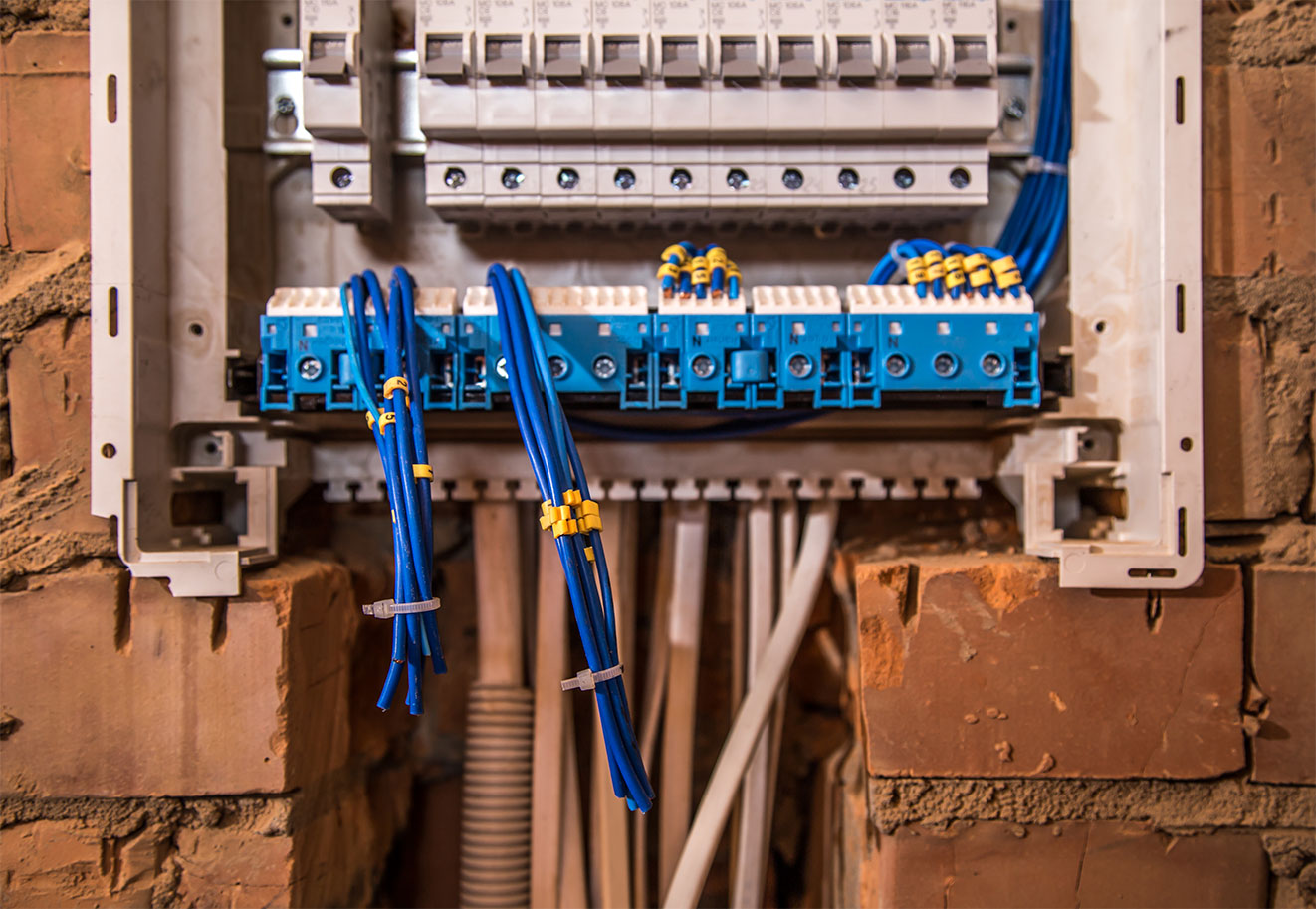
Cables must be installed according to strict rules: avoid random crossings, maintain proper bending radius, and separate power lines from low-voltage signals. Every connection must be secure, clearly labelled, and properly sized.
5. Install protective devices
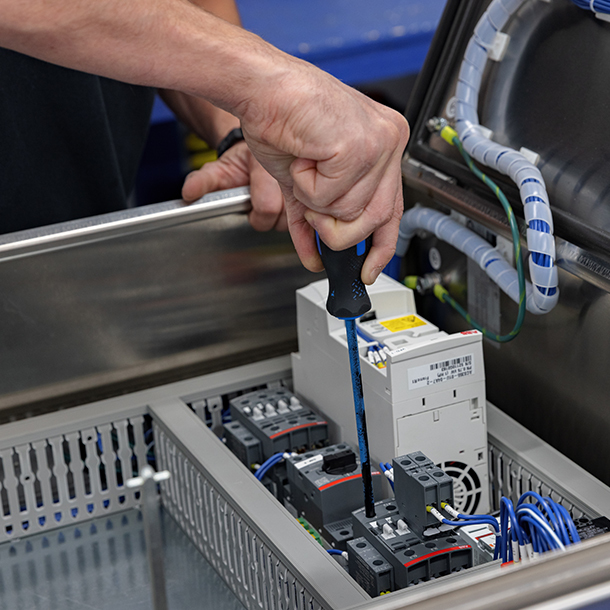
Install circuit breakers according to the load each circuit will handle. Ensure proper grounding is in place. All panels must be accessible, clearly marked, and safely enclosed.
Final verification and mandatory inspections
6. Final check by a certified electrician
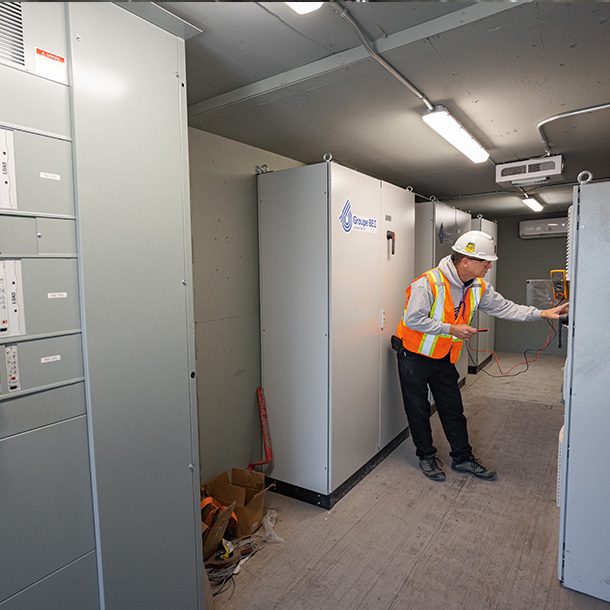
Before activating the system, a licensed electrician or master electrician must inspect the entire setup. They’ll verify polarity, connection integrity, and whether the network functions as per the approved plans.
7. Official inspection (RBQ or accredited body)
For industrial projects or major renovations, a third-party inspection is often required. An accredited inspector will issue a compliance certificate. This step is crucial for insurance purposes and formal certifications.
When your installation is completed or integrated by Groupe BEI, we can provide a formal certificate confirming that the work meets the Quebec Construction Code standards.
Keeping your installation compliant over time
A compliant system today can fall out of spec tomorrow if neglected. Dust, overloads, vibration, and humidity can degrade your setup over time. That’s why we recommend
-
A regular maintenance and inspection program
-
Annual thermographic inspections
-
Routine testing of breakers (manual and differential)
Update your plans and diagrams whenever changes are made to the network.
Common mistakes to avoid in business installations
Overlooking renovations:
An outdated circuit can become hazardous if overloaded. Always verify compliance during expansions or building upgrades.
Lack of documentation:
An undocumented installation makes troubleshooting and upgrades much harder. Clearly document each circuit, breaker, and connection.
Using uncertified components:
Cheap or non-compliant materials can put your entire system at risk. Always choose CSA- or UL-certified parts.
Why work with Groupe BEI?
At Groupe BEI, we understand your industrial challenges. We work with factories, integrators, and electrical solution distributors across Quebec. Our approach includes
-
Strict compliance with current electrical codes
-
Certified and experienced electricians
-
Full project support from design to verification
-
Clear, professional documentation
Whether you need a new installation, an upgrade, or a full compliance check, you can trust us to get the job done right.
Trusted resources for electrical compliance
Electrical safety and compliance require expertise. Here are some official resources to support your efforts:
-
Régie du bâtiment du Québec (RBQ): Provincial construction code and inspection guidelines
-
Canadian Electrical Code (CSA C22.1): National standard for electrical systems
-
Commission de la construction du Québec (CCQ): Trade-specific compliance information and licensing
Key takeaway: compliance is an investment
A compliant electrical installation isn’t just a legal requirement; it’s a strategic investment in safety, efficiency, and long-term reliability. Don’t leave it to chance. Work with trusted professionals, document every step, and schedule regular inspections to keep your systems secure.
Planning a new electrical installation or need a full compliance audit?
Contact Groupe BEI today. Our team will support you at every stage, from assessment to certification.